Tampilkan postingan dengan label Zen. Tampilkan semua postingan

Selasa, 01 Maret 2011

6 Reasons Maxim Lapierre Will Fit In Just Fine

Some have voiced concern over Maxim Lapierre's potential effect on the dressing room. He'll be fine.

By now, you're probably aware of deadline acquisitions Chris Higgins and Maxim Lapierre, the two forwards the Canucks picked up at yesterday's trade deadline (and also: MacGregor "NC" Sharp, where the NC stands for "Nobody Cares" but, true to the nickname I just gave him, nobody cares). It's been almost 24 hours since the deals went down, so we apologize for being a bit slow on the take. Now seems like a good time to point out that PITB's not in the business of strictly covering the news. News reporters do that. We're bloggers, and as such, we're much more adept at waiting in the weeds to disagree with people. And being unemployable.

Anyway. Speaking of disagreement, I'd like to take a moment to address the negative reactions to the Maxim Lapierre acquisition. On paper, Lapierre fits the Canucks' needs. It was well-known that the team was after a gritty, depth center with some recent playoff experience, and Lapierre met those requirements while coming relatively cheap, both in asking price and cap hit. However, Lapierre also has some attributes that give pause. Most assumed the Canucks would pick up a mature, seasoned, veteran type--quiet, likable and disciplined. Lapierre is not those things. He's got a reputation as a yapper and a pest, prone to infuriating as well as the occasional undisciplined penalty. These, of course, are qualities from which the Canucks have successfully moved away in recent times. The immediate concern is that Lapierre might disrupt the delicate balance in the dressing room.

But that's probably not gonna happen. Here are six reasons I suspect Maxim Lapierre will fit in just fine:


1. The Canucks have a commitment to maturity. Again, that's a commitment, or, put another way, an organizational mandate. We've talked, in the past, about the new Zen approach the team has taken this season, cutting down on emotion, chirping, taking stupid penalties, and arguing with officials. Effectively, they grew up, and we need to remember that this required a total buy-in from the players, some of whom modeled their games on a completely antithetical approach. I suspect someone will remember to inform Lapierre as to how the team does business. Ryan Kesler or Alex Burrows (if the talk needs to happen in French) seems a likely candidate, which would be appropriate because:

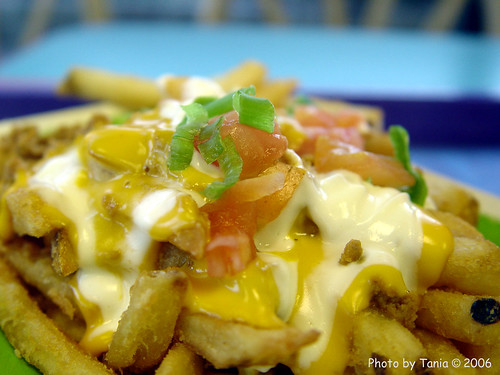
2. The Canucks got through to Kesler and Burrows, and seriously, these guys were pests supreme (pests with sour cream, nacho cheese, tomatoes, green onions and ground beef). If the Canucks were able to get Kesler and Burrows to buy in, something tells me Maxim Lapierre is also breakable. He'll likely be accommodating, especially when he can see firsthand in Ryan Kesler the benefits of playing a more mature game. One benefit is increased leadership responsibilities, which brings me to point number three:

3. The leadership core on this team is solid. Kesler is a part of that core, and you'd have to think he knows what to say to a super pest, having recently outgrown such ranks. But Kesler is also part of a leadership group that includes Daniel and Henrik Sedin, Manny Malhotra, Dan Hamhuis, Kevin Bieksa, and Roberto Luongo. Granted, a player can blow up a room. It happens. But if you ask anyone for a recent example of a player accomplishing this ignominious feat, they'll bring up Sean Avery, and let me be clear on one thing: Dallas's leadership group didn't get nearly enough blame for that fiasco. Their leadership core is suspect. We saw evidence in all four matches with the Stars this season. People were so busy judging Sean Avery that nobody stopped to point out that, in a room full of integrity and character guys, one idiot simply can't do what he did. The Canucks aren't at risk here. This group is too tight-knit. Heck, the freaking captain has a twin brother. There's no way Lapierre disrupts this room. From Henrik Sedin, with the quote of the year, via Iain Mcintyre: It's not about five or six guys; we have 20 to 23 guys doing exactly the same thing. You'd have to really be a prick to change that many people. True that, especially since:

4. Lapierre's a deadline pickup, and that matters.
Justin Bourne recently took us inside the mind of deadline acquisitions when he pointed out that, as the new guy in a room with an established pecking order, you simply shut up and play hard. Really, there's no better time to pick up a guy of Lapierre's ilk than at the deadline, when the mood of the room is already set. Lapierre's the new guy; he's going to have to assimilate on the fly. There's no time to not fit in; he's going to be much too busy trying to fit in. He'll be motivated, too, because:

5. This is a pretty great situation for him. Lapierre's been brought to a Stanley cup contender, and all they ask is that he contributes and doesn't disrupt the room. These are not difficult requests. As I said earlier, it's a tough room to disrupt, and the contributions the Canucks are asking for are fairly meager. Unlike in Anaheim, where he was expected to be a third-line guy, the Canucks simply need him to be fourth-line good. In other words: not that good. Heck, he's really only being asked to do things he's good at: play sound defensively, contribute on the penalty kill, hit, and agitate. Don't think Lapierre isn't aware that this is a great opportunity, either, and I suspect he's happy to have been sought. The top-ranked team in the NHL wanted him as a final piece, and that has to be somewhat inspirational. In such cases, all you can do is give your all, try to reward that faith, and try not to screw things up, which shouldn't be too hard because:

6. He's not as undisciplined as you've heard. Chatter says otherwise, but it's not quite true. His former team in Montreal is undisciplined (evidenced by this season's epic tilt with Boston that featured 14 goals and 187 penalty minutes). Playing for that team, it's pretty tough to look like a paragon of composure. However, after leaving Montreal in late December, Lapierre only picked up two minor penalties during his stint with Anaheim. In short: not only is he capable of disciplined play, he's willing to make adjustments to his game for a new team.

So there.

Selasa, 21 Desember 2010

Winning the Games They're Supposed to Win


Tony Gallagher wrote an article after the Canucks downed the Maple Leafs 4-1 on Saturday criticizing the effort from the Canucks and wondering how much longer they could play lackadaisical hockey and expect to win. He came just short of accusing the Canucks of playing with the Maple Leafs like a cat with a mouse. There's an inherent expectation in Gallagher's article that the Canucks need to build proper habits now in the regular season so that the habits are properly ingrained come playoff time. Never mind that it's only December, the Canucks should be playing with playoff intensity now.

I'm used to hearing the opposite from Canucks fans and media. I'm used to hearing after every loss to a supposed "inferior" team, The Canucks should be able to beat these guys! or These are the games you have to win! and my favorite Good teams don't lose to bad teams!

The fact is that good teams do lose to bad teams: even the worst team in the league wins a few games and by definition that means they beat "superior" teams. But the complaint has been especially acute amongst Canucks fans. The theory is that the Canucks continually play down to their opponent's level and lose games they should win. Witness the 2005-06 Canucks, who lost all 4 of their meetings with the last-place St. Louis Blues, finishing 3 points out of a playoff spot. Their inability to beat the worst team in the league became the story of that season.

I've even heard the complaint in reference to last season, as some of my more cynical friends pointed to 2 losses against the Edmonton Oilers, the team that finished 12 points behind Toronto for last in the NHL. So is this the case? Did the Canucks play worse against lesser opponents, squandering points that might have put them in a better position in the playoffs?

The Canucks finished the 2009-10 season with a 49-28-5 record, for 103 points out of a possible 164. That gives them a point percentage of 0.628. This tied them for 5th in the NHL behind Washington, San Jose, Chicago, and Phoenix. Their record against teams that missed the playoffs was 25-15-1, for 51 points out of a possible 82. Their point percentage against teams that missed the playoffs was 0.622. Their point percentage against teams that made the playoffs was 0.634.

While not a major difference, it is true that the Canucks had a worse point percentage against teams that missed the playoffs when, by all rights, they should have a better point percentage against such teams. So it's true that the Canucks may have played down to their opponent's level last season. A few more wins against the lesser lights of the NHL would have put them within striking range of 2nd or 1st in the Conference, meaning a better playoff seeding and the possibility of not meeting the Blackhawks in the second round.

So what is happening this season? Are the Canucks continuing the pattern? Will the "game-playing," as Gallagher puts it, hurt the Canucks down the road, perhaps preventing them from a higher finish?

The answer, thus far, is no. As of today, the Canucks have a record of 19-8-4, collecting 42 out of a possible 62 points, a percentage of 0.677. Their percentage against teams who are currently sitting under the playoff bar is 0.737 and against teams currently in the playoffs, 0.583. The Canucks are beating the teams they should beat, even if it isn't with the style, panache, or intensity that Gallagher would like to see. Instead, the Canucks have been calm, collected, and zen-like in their approach to such games, efficiently getting the job done. It's actually been enjoyable to see the Canucks win such games without the intensity that has seemed so necessary in the past. Indeed, it seems that these games that the fanbase feels should be easy victories have been, well, easy.

More concerning is their point percentage against the rest of the NHL, which sits well below last season's excellent pace. Tonight's battle against the Red Wings for second place in the Conference will be a good test of their mettle, as will games at the end of the month against the Conference-leading Flyers and Stars. In-between, I expect they will bring their miniature rakes to work against the Blue Jackets and Oilers, coolly and calmly winning the games they're supposed to win.

This Year's Canucks are Very Zen


In the aftermath of Vancouver's last regulation defeat, a 3-2 home loss at the hands of the St. Louis Blues, Province writer Jason Botchford questioned questioned the Canucks' grit. "The Blues forwards were rarely touched," Botchford wrote, "Even after they shoved around Luongo. In one incident, BJ Crombeen took a shot at the Canucks goalie without even getting a passing glance from the rest of the Canucks." But it's not as if they didn't see it. You know if Botchford saw it, the Canuck players did too; they simply chose not to respond.

This is uncharacteristic for the Vancouver team fans have come to know. In fact, Vancouver has long held a reputation for employing spirited chirpers and pests who can't help but get involved in scrums around the net, especially in the Alain Vigneault era. Canuck games, especially against past postseason opponents, are always full of spirit and high in penalty minutes. In the past, reactionary chirping would have been automatic, but that appears to have changed. Rather than engage teams who take cheap shots, this year's Canucks simply ignore it, put their heads down, and make their line change. It isn't that the Canucks are missing that gritty element, they've merely decided to opt out.

We've all seen the signs; I just don't think anybody's fully touched on what it is we're seeing: clearly, there is an organizational mandate to play with focus and composure, leaving antagonism and agitation to less talented teams. The evidence is everywhere. Not only are the Canucks avoiding the action after the whistle, but they've suddenly quit arguing penalty calls. That's paying dividends, as their penalty minutes have been severely reduced.

For the first time in Alain Vigneault's four seasons behind the bench, the Canucks are among the top five teams in the NHL when it comes to avoiding the sin bin. Only four teams have less penalty minutes. Prior to this season, the Canucks have finished in the bottom five three times, the bottom two twice. Their previous best year was 2006-07, when they finished 19th in the NHL. And don't think this is because they've cut down on fighting. The Canucks still have the 6th-most major penalty minutes in the league. It's avoidable minor penalties that have been excised, especially ones based on reputation and retaliation.

The Canucks made personnel decisions based on the new Zen approach to their game. In the offseason, they chose not to keep Darcy Hordicuk or Shane O'Brien, spirited, emotional guys who could blow up a scrum like few else. In their place, they brought in players known for their physicality during play. They were slow to replace Rick Rypien with another capable pugilist, and finally brought up the feisty Aaron Volpatti to play the wing on the fourth line. Even Volpatti is suddenly playing composed, controlled hockey, and talking about "picking your spots." He's been read the riot act, and he's fallen in line: he has more NHL goals than penalty minutes.

Even the Canucks' choice of captain was a byproduct of this new approach to the game: Ed Willes is 100% correct that Kesler is a much more spirited leader, but Henrik's is the personality the Canuck brass wants their players to emulate. Henrik is a quiet leader in the mold of the great Ray Bourque, a man that associate coach Rick Bowness used, in an interview with Iain Macintyre, as a template for Ryan Kesler's personality transplant:

“When I coached Ray in Boston, Ray never said a word to anybody,” Canuck associate coach Rick Bowness said. “The puck dropped and Ray played his heart out every game. That’s what you knew you were going to get. You couldn’t throw him off his game; he just kept coming. And that's how Kes is playing right now.

It's how he's been asked to play. Kesler has been charged with a quieter, more composed game, and as Greg Wyshynski pointed out, it's jumpstarted a drastic maturation. His new focus and poise has paid immediate dividends, too. He's 10th in the NHL in goals, and is emerging as a bonafide NHL superstar. Here's Jason Botchford again, this time on Kesler's transformation:

Not too long ago [...] Kesler could be distracted, caught up with verbal jousting and settling scores. It's a combination which can lead to losing composure and taking penalties. He has made some changes. Maybe they haven't left him with more points, but they have made him a better player.

And now the points are starting to come, too.

This change was necessary, especially after the Canucks' last two playoff losses. Two years in a row, they've held a lead in the series only to lose their composure and set off a string of mental mistakes. Two years in a row, their top stars have lost their game trying to find retribution. In their attempts to meet the Blackhawks' superior grit with grit of their own, the Canucks stopped playing their game and locked themselves into an uphill battle.

I would imagine it was this realization that led to the new philosophy. Players have said almost as much. Here's Alex Burrows, on where the Canucks want to be as a team, especially after that playoff ousting:

Last year it was a tough way to lose out to Chicago. We weren't mature as a group and weren't really ready to face that kind of pressure. Being a top-line player and playing with the twins, the managers and team wanted me not to get involved with scrums as much or get under people's skin as much. They have me focusing on making plays and scoring goals. It's about being a plus player out there while being a good player defensively.

You know when the Canucks are asking their best pests to avoid scrums and agitation, they expect the rest of the team to follow suit. So far, they've gotten a total buy-in. In the last game against the Blackhawks, Christian Ehrhoff was the most visibly emotional Canuck.

In the game against the Toronto Maple Leafs, former Blackhawks Kris Versteeg attempted to agitate Keith Ballard in much the same way he'd successfully agitated the Canucks in last year's playoffs. Rather than retaliate, Ballard unemotionally ignored the bevy of slashes and cross-checks. Versteeg was eventually called for an infraction. Then he argued the call, and was assessed a second penalty. The end result was four minutes of power play time for the Canucks because Keith Ballard kept his composure.

Time will tell if the Canucks can keep this up, especially as other teams begin to attack their Zen-like approach. It will help if their powerplay can stay strong and discourage teams from taking cheap penalties, because that's where the Canucks will find their payback. They don't want to play gritty; they want to play hockey. They must continue to remain calm under pressure; to stay focused on the moments between whistles and not the moments after them; and, to keep their composure when opponents try to rattle them. If they can do that, they've got a pretty good chance to do quite well for themselves.


Edit: this article initially misrepresented some of Jason Botchford's opinions. The final paragraph has been changed to correct this.