Jumat, 04 Februari 2011

Manny Malhotra is an Enabler

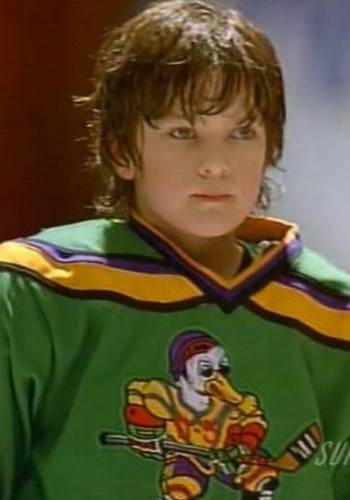
Pictured: Manny Malhotra, ultimate team player, enabling Ryan Kesler to complete a fist-bump.

It wasn't that long ago that Manny Malhotra was receiving premature buzz for the Selke Award. Now, mired in a 16-game pointless drought, questions are being raised about his role as the third-line center, with some suggesting that Hodgson might supplant him before the season is done. I heard from some quarters that Hodgson's line with Tanner Glass and Jeff Tambellini may as well have been the third-line against the Coyotes, as they often seemed more effective on the ice than the trio of Malhotra, Torres, and Hansen. And tonight on the Team 1040, one of the topics of conversation was whether Malhotra is actually worth his pricey 2.5 million dollar contract.

Yes. The answer is yes, he is.

Don't get me wrong. His point-scoring drought is regrettable and it would be nice if he and Torres broke out of their slumps to provide some tertiary scoring, but Malhotra's value isn't found in directly providing scoring. Instead, Malhotra is an enabler. He enables the scoring in others, particularly in Ryan Kesler and the Sedins.

Unlike a playmaker, who enables scoring in linemates, Malhotra enables the scoring of those on other lines.

The addition of Malhotra has had a trickle up effect, as he takes on the checking role previously held by Kesler, freeing Kesler up to greater offensive opportunities, which he has capitalized on with aplomb. Meanwhile, despite Kesler's increased offensivity, Henrik Sedin and his line have been able to continue in their primarily offensive role thanks to Malhotra's presence in the lineup.

I'm going to take a look at how this plays out using two different statistics from Behind The Net: Corsi Relative Quality of Competition (Corsi Rel QoC) and Offensive Zone Start Percentage (Ozone%) and how Malhotra compares to the two centres above him, Kesler and Sedin. I will then be following it up with a brief discussion of faceoffs. I will be limiting each to players who have played at least 20 games.

As I pointed out in a footnote in a recent post, Manny Malhotra has the lowest Ozone% on the Canucks. He starts in the offensive zone a miniscule 27.7% of the time. He is trusted to take the vast majority of the Canucks' defensive zone faceoffs, and for good reason: he's currently second in the NHL in faceoff percentage, right behind Washington's David Steckel, who has taken 370 fewer faceoffs. In fact, Malhotra has won the most faceoffs in the NHL, with 591 victories. NHL.com doesn't distinguish between defensive and offensive zone faceoffs, which is unfortunate, but from observation I can tell you that the majority of those wins were in the defensive zone.

To illustrate the significance of this, note that Malhotra has the second lowest Ozone% in the entire NHL. Malhotra is on pace to take 1495 faceoffs this season. Of those, 1081 will be in the defensive zone. That averages out to around 13 defensive zone faceoffs per game, compared to 5 offensive zone faceoffs. What's especially interesting is that this is a massive drop in offensive zone starts for Malhotra. In San Jose last season, he started in the offensive zone 45.3% of the time. In Columbus the year before, it was 43.4%.

The biggest impact of this stat has been on Henrik Sedin. In 2008-09, Sedin started in the offensive zone 49.9% of the time. This saw a modest bump to 57.7% in 2009-10. This season, with the addition of Malhotra, Sedin is starting in the offensive zone a whopping 70.1%, good for third in the NHL behind Cam Janssen and--surprise!--Daniel Sedin. In the article on Alex Edler, I referred to this kind of discrepancy in zone starts as sheltering Edler, but it might be more accurate to refer to it as putting your best offensive players in the best position to score. Kesler has also seen a modest bump in Ozone%, but it's about as modest as Bristol Palin's outfits and, like Bristol Palin, not really worth mentioning.

When it comes to Corsi Rel QoC, however, the addition of Malhotra has made a massive difference for Kesler. First, a quick definition of terms: Corsi is a measurement of total shots attempted both for and against. Essentially, add up all the goals, shots, blocked shots, and missed shots that your team has taken while you are on the ice and subtract all the goals, shots, blocked shots, and missed shots that the opposition has taken while you are on the ice. It's a measure of puck possession that strongly correlates to scoring chances and, therefore, goals. Relative Corsi is a method of normalizing a Corsi rating by comparing a player's Corsi rating with the team's Corsi rating when he is off the ice. It's considered to more accurately measures an individual players contribution to puck possession. Finally, Corsi Rel QoC is a measurement of the quality of competition a player faces based on the Relative Corsi of his opponents. It's more accurate than the base Quality of Competition stat, which uses +/-. Does that make sense? Good. Moving on.

In 2008-09, Kesler led the team in Corsi Rel QoC, with a rating of 1.265, just ahead of Willie Mitchell. This was good for 13th in the NHL; night in and night out, Kesler faced the best players the opposition had to offer and earned his first Selke nomination. Last season, Kesler was second on the Canucks, just behind Willie Mitchell. Kesler continued to face tough competition, increased his offensive production, and was once again nominated for the Selke. This year, however, Malhotra is taking the heat off Kesler, as Malhotra is third in Corsi Rel QoC on the Canucks, first among forwards. Meanwhile, Kesler is facing the 8th toughest competition, freeing him from his checking duties. The result: Kesler has embraced the offensive side of his game: he has already bested his career high in goals, is on pace for 47 goals and 32 assists, and is receiving hype not for the Selke, but the Hart. With Malhotra bearing the brunt of the opposition's offensive pressure, Kesler has gone from first amongst Canucks forwards in Corsi Rel QoC to sixth.

Intriguingly, the total number of faceoffs taken has been fairly evenly split between Malhotra, Kesler, and Sedin. The three centres are on pace for 1495, 1471, and 1437 faceoffs respectively. The total difference from top to bottom is less than one faceoff per game. Last season, Henrik took 1527 faceoffs to Kesler's 1401. Next closest was Kyle Wellwood with 725. The difference was more pronounced in 2008-09 as Henrik took 1364 faceoffs to Kesler's 976, with Wellwood lagging behind at 621. To be fair, Kesler played on Mats Sundin's wing for the latter part of that year. Oddly enough, despite being one of the best faceoff men in the league last season at 62.5%, Malhotra took only 664 draws for the Sharks. It could be argued that the Sharks underutilized him, though to be fair, Scott Nichol is not too shabby at faceoffs.

In any case, the number of faceoffs that Malhotra takes for the Canucks dwarfs Kyle Wellwood's contributions the last couple of seasons. As good as Wellwood was on the draws, Malhotra is even better and is clearly more trusted by the coaching staff. This balance in faceoffs taken spreads the responsibility around, with Malhotra taking the majority of defensive zone faceoffs, Henrik taking the majority of offensive zone faceoffs, and Kesler splitting between the two fairly evenly. And with Malhotra taking over the role of checking line center, facing the toughest competition the other team has to offer, Kesler has been free to focus on his goalscoring.

It's also noteworthy that even with his 16-game drought, Malhotra is still on pace for 27 points this year, right on par with his post-lockout career totals. He has been carrying the puck to the net with some authority recently and has come achingly close on numerous scoring chances to end his slump. But the Canucks are not dependent on him doing so: he just needs to continue lightening the load of his teammates on the top-two lines, enabling them to continue their potentially award-winning seasons.

Kamis, 03 Februari 2011

This Goalie Fight Was Ill-Advised


I'm posting this goalie fight video for the same narrow-minded reason this goalie fight happened: because, common sense be damned, this is a goalie fight, and however ill-advised it might have been, you never break up a goalie fight.

Let's stop and consider all the reasons why this was a poorly-conceived event: first, Rick DiPietro is so prone to injury he makes Sami Salo look like a mutant blessed with regenerative abilities. Rumours are swirling that DiPietro has a broken orbital bone, maybe a concussion, and some other facial injuries. Maybe they're untrue and he's fine, but considering his injury history, it's a wonder that Johnson didn't collapse his face. It sounds like he's going to miss at least one game, and maybe more, for something that could have been avoided. For DiPietro, this was a terrible idea. This is a guy that perma-tore his groin at the All-Star Game. All activites outside of basic regular-season goaltending should be off-limits for him. Ill-advised.

Update: Today, the team announced that DiPietro will miss the next four to six weeks with facial fractures and knee swelling.

It was a poor life decision for Brent Johnson, too. His reward for cleanly winning this tilt? He was kicked out of the game, and the shutout that he pitched for fifty-nine minutes was awarded to the team. Ask Roberto Luongo how much shutouts mean to goalies. Ill-advised.

And why were these two goalies willing to risk it all? Because goalie fights are awesome. This is despite the fact that there's no reasonable explanation why two goalies ever fight. 200 feet from one another for the entire evening, they can't possibly have beef. In the long run, the issue seems to be that they're dressed alike, which makes it a Bride War. That's right. It's a fine line between a goalie fight and a girl fight.

That said, maybe this is why it had to happen. In the words of Barney Stinson: You never break up a girl fight. Never. Who were DiPietro and Johnson to commonsense away the NHL equivalent?

Yes, the sheer joy of watching two goalies fight is something that overrides every reason it's a bad idea. And, even if those reasons are readily apparent afterwards, at least we got to see a goalie fight.

Rabu, 02 Februari 2011

I Watched This Game: Canucks at Coyotes, February 2, 2011

Canucks 6 - 0 Coyotes


As a Canucks fan, it is thoroughly disorienting to cheer for the best team in the league. Cheering for the Canucks and cheering for the #1 team in the NHL is like serving both God and Mammon. It creates a kind of cognitive dissonance. Take tonight for example: the Western Conference is extremely tight. A mere 5 points separate 4th place Nashville from 12th place Calgary. In this atmosphere, a 6-0 shellacking of a team in playoff contention would be greeted by giddiness and glorifying of various hockey gods for bestowing such good fortune upon the Canucks. Instead, the Canucks are so far ahead of the pack (a whopping 7 points up on 2nd place Detroit), that this solid victory is treated with placidity and calm: the Canucks won. I was entertained. I am pleased. I watched this game.

  • Given the plethora of goals scored by the Canucks tonight, it seems fitting to, perhaps, mention them one by one so that we may revel in them. But first I shall point out an astonishing fact: the Canucks scored 6 goals tonight. Henrik Sedin had zero points. Daniel Sedin had 1 assist and now has 5 points more than his brother. Also an astonishing fact: the regal horned lizard shoots blood out of its eyes to defend itself from, incidentally, coyotes. Is this the blood that Daniel Sedin is out for?
  • Alex Burrows scored the opening goal of the game, giving him a 4-game goal-scoring streak. Just like his goal last game against the Stars, this adequately demonstrated the Fourth Law of Sedinery: if the opposing team has a chance to clear the puck out of the defensive zone and instead gives the puck away to the Sedins, a Canuck goal is a foregone conclusion. It's a classic Burrows maneuver: head to the front of the net, get as close as humanly possible to the goalie, and look for the tip. The distance between his buttocks and Byzgalov's chest was approximately the width of a hadron.
  • The second goal was scored by Jannik Hansen off a Lee Sweatt-created rebound. Sweatt looked significantly more comfortable on the ice tonight, getting good body position in puck battles and blocking 4 shots. His jump up into the rush on Hansen's goal was a well-timed piece of offensive defensivity. Of note, Hansen came directly off the bench to score the goal, with none of his linemates having yet made the change. Thus, Malhotra and Torres were the only Canucks to finish without a plus in their +/- column and both were largely invisible tonight.
  • Incidentally, the sports bar Harrison and I went to tonight gave us hockey pucks with the numbers of Canucks on them. If they scored a goal, free booze. I got lucky number 36, so Jannik Hansen scored me a beer. If I ever get the chance, I'll have to buy him one. I'd start a hashtag, but #LetMeBuyYouABeerHansen just doesn't roll off the tongue. It's also vaguely creepifying.
  • Cody Hodgson looked NHL-ready tonight. Yes, he scored his first NHL goal (seen above) with a nifty combination of puck strength, patience, and precision, but he also showed poise in the defensive zone, aggressiveness on the forecheck, and occasional surprising bursts of speed. Combine that with a respectable 4-for-7 night on faceoffs and one might be inclined to keep him on the roster for a few more games. Hopefully that one is Mike Gillis. He's actually the one who decides that.
  • Seriously, though. What a fantastic goal. Ryan Kesler's first of his two goals, however, was even prettier. He dragged it around Adrian Aucoin like he wasn't even there. I was surprised Aucoin was. Quite frankly, I was surprised to be reminded he existed. Adrian Aucoin is still playing in the NHL? Wasn't he on a defensive pairing with Colin Campbell? How old is this guy?
  • Mason Raymond played well and scored the fifth goal of the game on the kind of simple play he needs to make more often: he uses his speed to force all-star Keith Yandle into a rash decision then heads straight for the net, turning and getting in the perfect position to chip in the Samuelsson pass. After breaking out of a 9-game scoring slump with 2 points on January 24th, he cut short a new scoring slump by scoring another 2 points only 3 games later. Raymond, along with Kesler and Hamhuis, finished a game-high +4. That's more pluses than Pepsi Lime (only +3 to Will? Lame).
  • And to cap things off, Kesler upped his goal total for the year to 30, marking the first 30-goal season of his career. This time he did all the work himself, picking a pocket, drawing a penalty, and sniping a corner. He seemed angry rather than celebratory after both his goals tonight and this post-game quote may shed some light: "I was kinda pissed about a couple things on the ice...I don't want to get fined so I don't want to say anything." It's a tribute to Kesler's growing maturity that he turned this anger into beautiful goals rather than post-whistle scrums.
  • Luongo seemed incredibly pumped to see his shutout survive a last-minute powerplay for the Coyotes. Meanwhile, Tanner Glass was likely sweating in the penalty box desperately hoping that Luongo wouldn't have him kneecapped if Phoenix scored. I'm guessing he was almost as nervous as he is about his upcoming scrabble battle. How do you spell relief? Seriously, make sure you know. I before E. Harrison loves to challenge.
  • I like Chris Tanev. Let's keep him.
  • It may have just been the lackluster quality of the televisions at the sports bar, but the coyote at center ice seemed quite jaundiced. He should see a veterinarian about that.
  • The Green Men revealed in our interview with the duo back in December that they would be taking their act on the road. Sure enough, they showed up right next to the penalty box in Phoenix; unfortunately, there were only 3 penalties and only one of them against the Coyotes. It didn't give them much of an opportunity to put on a show.
  • And finally, the fans who showed up in Canucks jerseys with the sign saying "We're actually Coyotes fans. We just dressed this way to fit in" are my new favorite people.

The Dark Times Have Passed For Cody Hodgson

In case you just awoke from a hockey coma, you've probably heard that Cody Hodgson, prized prospect of the Vancouver Canucks, played his first NHL game yesterday. It's been a long time coming for Hodgson, who has overcome a boatload of misinformation, intrusive media coverage, rampant speculation and injury troubles just to get here. But now he's here, and we rejoice, not just because of what he had to go through, but because the hyperbole and panic surrounding Cody should subside.

During last night's game, Hodgson was featured in an intermission segment about his first NHL game which used the phrase, "The dark times have passed for Cody Hodgson," before making a cut to Hodgson for an uninteresting quote about injuries. I don't even recall what he said--I just remember thinking that Hodgson's follow-up sentence could have gone in so many better ways. Somehow, I expect a phrase like the dark times have passed to be followed up with a story about how someone overcame full-on vampirism. Imagine this exchange:

  • Narrator: The dark times have passed for Cody Hodgson.
    Hodgson:
    I used to be a vampire.

Now that's some badass journalism right there. But that's just me. From where I'm sitting, it could have gone in so many better directions. After the jump, we envision the myriad possible responses to this open-ended lead-in:


  • Narrator: The dark times have passed for Cody Hodgson.
    Hodgson:
    I'm really more into milk chocolate now.

  • Narrator: The dark times have passed for Cody Hodgson.
    Hodgson: When I woke up this morning, the sun had come out again.

  • Narrator: The dark times have passed for Cody Hodgson.
    Hodgson:
    I blinked. My eyes were closed for a millisecond. How is this a story?

  • Narrator: The dark times have passed for Cody Hodgson.
    Hodgson:
    Well, they're actually called the Middle Ages, but I did just get back from some wacky time travel adventures. Glad those are done.

  • Narrator: The dark times have passed for Cody Hodgson.
    Hodgson: Yeah, I prefer a mild roast now.

  • Narrator: The dark times have passed for Cody Hodgson.
    Hodgson:
    They're transition lenses. The tint comes back when I go outside. How have you never heard of these before?

  • Narrator: The dark times have passed for Cody Hodgson.
    Hodgson:
    Nights when there's no moon are a bit tough on me because I'm a reverse-werewolf.

  • Narrator: The dark times have passed for Cody Hodgson.
    Hodgson: Okay, I know my girlfriend was black, but frankly, I think that's kind of a racist way to describe the end of the relationship.

  • Narrator: The dark times have passed for Cody Hodgson.
    Hodgson: After the high stick, both of my eyes were swollen shut, but the swelling has gone down, so I'm finally able to see again.

  • Narrator: The dark times have passed for Cody Hodgson.
    Hodgson: As a Kryptonian, I derive power from earth's yellow sun. Nighttime is a time of weakness.

  • Narrator: The dark times have passed for Cody Hodgson.
    Hodgson:
    Dark City is a weird place. The only thing to eat is their local newspaper, and it's difficult to digest.

  • Narrator: The dark times have passed for Cody Hodgson.
    Hodgson:
    After I broke open the piƱata, they removed the blindfold.

  • Narrator: The dark times have passed for Cody Hodgson.
    Hodgson:
    I found the light switch on the far wall, but only after banging my shin something fierce on the coffee table. Stung like crazy.

  • Narrator: The dark times have passed for Cody Hodgson.
    Hodgson:
    I teamed up with The Canuck and his sidekick The Moose to defeat the NHL Guardian's evil nemesis, Devin Dark. It was pretty cool, I guess.

I Watched This Game: Canucks at Stars, February 1, 2011

Canucks 4 - 1 Stars


It might be safe to say the Canucks are better than the Stars. It stands to reason. The Canucks have beaten the Stars in every single one of their three meetings this year (QED, bitches). In fact, Vancouver has outscored Dallas 15-3 in these contests (4-1, 7-1, and 4-1). From a Canucks' fan perspective, there's little to dislike. Really, the only thing about which you could gripe would be the team's inability to shut these guys out, and you know what? I'm gonna gripe about it. It's unacceptable, really. I'm downright sick of these bogus 59-minute efforts. Yet again, the crappy Canucks gave up a single craptastic goal to the craptacular Stars. Ridiculous. Anyway, I watched this game:

  • The Stars were clearly motivated to seek some measure of revenge tonight, especially after coming apart in the two previous losses. For the first time in three games, they kept their heads, and tried, instead, to punish the Canucks with tough physical play. They sort of succeeded, too, registering 48 hits to the Canucks' 18, led by captain Brendan Morrow, with eight. That's a Michael Jackson to Jermaine Jackson ratio of hits. Thankfully, all the Canucks skated away without injury, save Aaron Volpatti, who left the game with bruised rib cartilage.
  • The Sedins have taken a beating over their careers, and considering how much time they spend with their back to defenders, ripe to receive unlimited crosschecks, you'd think their spine was made of silly putty by now. Instead, they've simply gotten quite good at absorbing the blow. I noticed one play where Daniel Sedin actually backed into the crosscheck, and the perfect timing of it caught his defender off guard and caused him to lose his footing. It was sort of brilliant.
  • With the massive hit advantage, the shots completely even and the scoring chances relatively even, you'd think the Stars would have fared better. But there's still special teams, where the Canucks have been good all season, and downright spectacular against Dallas. As Gord McIntyre points out, they're 8-for-15 in three games against the Stars this year. "I don't know why," said Henrik Sedin, when asked about this, "But we own a lot of teams." I believe he meant to say pwn.
  • The great thing about the Canuck powerplay is that it can beat you a few different ways. They have a number of set down-low plays, plus the on-the-fly wizardry of the Sedins, but lately they've been getting it done with shots from the point. Mikael Samuelsson's goal came on a beautiful wrist shot from that weird spot on the ice just above the faceoff dot where it's against the rules for the goalie to try to save it if it's a power play. Christian Ehrhoff's was your basic blistering slapper.
  • Speaking of Ehrhoff, I'm going to be honest: If Samuelsson has to replace one of the point men on the power play, I much prefer he steps in for Alex Edler. Edler's a better passer than Ehrhoff, but he's not nearly as mobile. Edler's typically the static defenseman on the five-man unit, and that's a much easier vacancy to fill than Ehrhoff's specialized roamer role. Recall how the Canucks' power play suffered when Ehrhoff was out with the ear injury. With Edler out, they didn't miss a beat.
  • Speaking of defencemen, let's talk about Dan "Community Man" Hamhuis. He blocked a whopping seven shots tonight, and still found time to block two more in a charity basketball game for at-risk youth. He played a game-high 24:38, and, as usual, you hardly noticed him.
  • Am I the only one who's completely blown away by Lee Sweatt and Chris Tanev? Sweatt showed fabulous improvement in his second NHL game, playing physically and looking stronger on the puck than the game before the break. He threw three hits and blocked two shots in 14:53 of ice time. Chris Tanev, meanwhile, looked incredible in his 17:04 of playing time. I was especially impressed with one play where he went into the corner, drew two forecheckers, then made a calm, crisp outlet pass before absorbing the hit. His patience is remarkable. People were making a big deal about Cody Hodgson being the first Mike Gillis draft pick to make the NHL, but let's not downplay the GM's ability to find NHL quality talent elsewhere. Sweatt's a European signing, and Tanev was a free agent out of college. Considering any team could have signed these guys, Gillis deserves credit for the fact that they're on the Canucks right now.
  • Speaking of Cody Hodgson, it was nice to see him come out of this game without having to make an appointment with a medical specialist of some sort. It was a pretty quiet first night on the stat sheet for Cody, but if you want to raise an eyebrow, consider that he was 2-for-9 in the faceoff circle. That's not good, but the real story here is the fact that he took so many. Alex Bolduc was getting two a game on a good night. Is tonight the most faceoffs a Canucks' 4th-line center has taken in one game this season? I think it might be. Anyhow, apart from this, I thought Hodgson was only all right. At times, he looked slow, but he looked smart, and he looked skilled. He also looked a bit like Charlie Conway, captain of the Mighty Ducks. He should get right out in front of things and tell Alain Vigneault to stay the Hell away from his mom.
  • Before you get on Cody for the faceoffs, by the way, all the Canucks were terrible tonight in this regard. Their best guy was Henrik Sedin, who went 8-for-17. The team went 36% on draws. All-Star hangover? Kesler and Henrik still have to readjust to the other guy caring who wins the faceoff.
  • You've got to feel for Dallas a little on the shorthanded goal (above). After cutting the lead in half, Loui Eriksson gets a pass in a good area and looks poised for another great shot. Instead, the puck jumps, sending the Canucks the other way on a two-on-one. Pay special attention to Jannik Hansen's fake, which freezes Stephane Robidas and allows Hansen to space out the rush. Robidas knows that Kesler is streaking down his blind side, so when Hansen suggest an early pass, you know Robidas is worried that Kesler's about to blow by him. He backs up a little. Instead, Hansen keeps it, now with room to go wide, and the eventual saucer pass to Kesler is a beauty. This goal was a huge backbreaker, although not as huge a backbreaker as The Big Show's Cobra Clutch Backbreaker.
  • Cory Schneider was good, but this is no longer a new and interesting story. He's always good against the Stars. Stars of any kind, actually. Even Space Jam's MonStars would be no match for Cory Schneider. He should team up with Ben Affleck to form an intergalactic crime-fighting duo: Moonraper and Starcrusher.
  • Brilliant observation from Daniel's wife, Rachael: when the announcer says "no score," he is incorrect. The score is 0-0. Instance where the phrase might be acceptable: when the press box runs out of Skor.
  • And finally, how weird was it to have such a pitiful attendance? Granted, this had everything to do with a Dallas snowstorm that made it difficult to get to the arena, but still. At times, it gave the game an eerie sound, as the crowd noise was chillingly muted. I'm not sure who had a harder time with it: broadcast guys, who sounded nonplussed by the quiet, the production staff, who couldn't seem to stay away from depressing crowd shots, or the events staff, who clearly printed more "Crush the Canucks!" posters than they needed. They had so many, even, that they were giving them to Canucks fans. One little girl had folded over the "Crush the" portion and was proudly waving a sign that said "Canucks!" That girl is a genius.

Selasa, 01 Februari 2011

Alex Edler is Not a Number One Defenceman


I had intended to write this article prior to hearing that Edler was out one game and then indefinitely. Now, it almost seems in poor taste to write it, as the consensus seems to be wailing and gnashing of teeth now that Edler is gone for the foreseeable future. However, I noticed that Puck Daddy and the Vancouver Sun referred to Edler as the Canucks' "top defenceman" and some Canucks fans were coming just short of throwing themselves off bridges with the news that Edler would be out of the lineup. Heck, Jeff Paterson compared the Canucks losing Edler to the Flyers losing Pronger. I'm hoping he wasn't saying that Edler is as important to the Canucks' success as Pronger is to the Flyers', and instead, merely pointing out that good teams overcome injuries to good players. Yes, I hope that's all he's saying.

Let's not go overboard, people. Edler is a great defenceman: he leads the Canucks in average ice-time, powerplay time, and points from the defense. But he is not the Canucks' top defenceman. To be quite frank, the Canucks don't have a "top defenceman." Edler is merely a very good defenceman who plays with other very good defencemen. No one is doubting his contributions to the Canucks or that those contributions will be sorely missed, but there are too many components missing to label him the Canucks' top defenceman. While he has the potential, he is not yet a number one defenceman.

Edler is putting up fantastic offensive numbers and was set to surpass last season's point-total until this setback. But he's been putting up those numbers while playing some of the most sheltered minutes on the Canucks. While he leads the Canucks in average time-on-ice, that doesn't tell the whole story. Firstly, he's leading that statistic by just over one minute and is playing approximately the same number of shifts per game as Dan Hamhuis. The top-four defencemen for the Canucks are all averaging over 22 minutes per game. Combine them with Keith Ballard, who averaged 22:24 per game with the Florida Panthers last season, and you have five Canucks defencemen capable of playing top-four minutes. Conveniently, that is one more than they needed.

But that is beside the point. Let's look at Edler's minutes and breakdown the situations that he plays in, who he plays with, and who he plays against. In these types of endeavors, Behind The Net is a hockey blogger's best friend and NHL.com's statistics page is the guy in the blogger's group of friends that you mainly hang out with because he's the only one with Hi-Def and the full cable package.

First, let's look at his Quality of Competition. Of Canucks players to play at least 20 games this season (weeding out players like Peter Schaefer), Edler is 11th on the team in the quality of opponents he faces. Of the defence, he's 4th, well behind Dan Hamhuis and Kevin Bieksa in the statistic. The Ham-Juice defensive pairing continually faces the top competition night in and night out, leaving Edler and Ehrhoff to a much easier task. In comparison, players who are rightly called number one defencemen around the league generally face much stiffer competition. Duncan Keith is third on his team, just behind his defensive partner Brent Seabrook. Zdeno Chara is second on his team, first amongst the defence. Shea Weber is first in quality of competition in Nashville and Dan Boyle leads defencemen in the category in San Jose. There are exceptions, of course. The aforementioned Chris Pronger is 9th on his team, third amongst defencemen. Keep in mind, however, the injury troubles he faced and the improved depth on the Flyer's blueline; they appear to be sheltering him somewhat. Last season, he led the Flyers' defence in quality of competition and will likely see that number rise as the season progresses.

There are other considerations, of course. I've shown the quality of competition Edler faces, but that's just one component of the situations he plays in. Another area to consider is zone starts. Where do Edler's shifts begin? A whopping 59.2% of Edler's shifts begin in the offensive zone. This places him fourth on the Canucks, first amongst defencemen1. For perspective, that's the 12th most favorable O-Zone start percentage in the entire NHL amongst defencemen. It's clear from this stat combined with his quality of competition that Edler is not asked to focus on the defensive side of the ice. This isn't a knock on Edler, just an acknowledgment of his strengths as an offensive player.

Again, let's compare this to other defencemen who are considered number one defencemen. Duncan Keith is 12th on the Blackhawks, Zdeno Chara is 14th on the Bruins, Shea Weber is 12th on the Predators, and Dan Boyle is 12th on the Sharks. Each of these players plays in all situations but trends towards below 50% in offensive zone starts as they are counted on in tough situations. Edler is not.

Finally, let's look at a breakdown of Edler's time-on-ice. As mentioned above, Edler's icetime doesn't tower over his teammates as the icetime of number one defencemen generally do (Dan Boyle is averaging almost 6 minutes more icetime per game than his closest teammate). In addition, Edler gets almost twice as many minutes per game on the powerplay than he does shorthanded. Bieksa and Hamhuis, unsurprisingly, log the most shorthanded minutes. Again, a comparison with number one defencemen in terms of shorthanded time-on-ice: Duncan Keith leads his team, Zdeno Chara leads his team, and Dan Boyle leads his team. Shea Weber ends up in a situation much like Edler's and sees most of his special teams icetime on the powerplay. Chris Pronger, on the other hand, is second on his team for defencemen in shorthanded icetime despite his slightly sheltered minutes this season. Unsurprisingly, last season he led his team.

Not one of these stats is definitive on its own. In each category, a comparison can be drawn to a player who is considered a number one defenceman. Combined, however, and they paint a picture of a defenceman used primarily in offensive situations against easier competition. This is not a coincidence: the strength of the Canucks' defensive corps allows Edler (and Ehrhoff, but no one's running around claiming he's a number one defenceman) the luxury of playing with two of the top offensive players in the NHL in prime offensive opportunities, just like the strength of the Canucks' forwards allows the Sedins the same luxury. Edler's skill and poise is what earned him that position and he's an extremely valuable player to the Canucks. The powerplay will certainly miss his slapshot from the point and, more importantly, his sublime passing skills, but he's not the versatile, one-man show that a true number one defenceman needs to be. He doesn't play in all situations, he doesn't shutdown the opposition's best players, and he doesn't start on the penalty kill; he is not a number one defenceman.

Fortunately for the Canucks, they don't need him to be.


1. It's interesting to see the Sedins and Burrows at the top of the list and Manny Malhotra at the bottom. A big reason for the Sedins skyrocketing offensively is the increasingly sheltered minutes they have been able to play. It's also a big reason why Malhotra, Torres, and Hansen haven't been scoring a whole lot of points. Also note Keith Ballard's position on that list: you can stop wondering why he hasn't been scoring like many Canucks' fans had hoped.

Tanner Glass Is a Practicer

Another gem from Jeff Vinnick's great Behind the Lens series. Looks like Tanner's spelling GAVEL.

Just in case you thought that everybody had forgotten about the Scrabble Me Tanner challenge, here's where we currently stand: a date for the match is impending, but has not yet been set. The plan was to revisit things in the new year, but, if you'll recall, the Canucks played about 812 games in January, so there hasn't really been much time to think about anything unrelated to hockey.

For the clamorers: the shirts are on the way as well. The Canucks are helping us out with them a little, so we've had to go through all the proper channels, and there will be a few minor additions to their design (A possible Canuck Place logo on the sleeve, for instance). As you can see, from the picture above, nobody's forgotten about this story. I'm still mentally preparing myself to get punched in the nose when I play my third bingo in a row and deciding which media member to invite (thanks for the roses, Ian). Tanner Glass, fierce competitor that he is, is getting his practice on whenever possible, as seen above. Everybody remains excited, and we'll continue to keep you posted on the goings-on as they go on.